
Comment choisir un pc portable adapté au diagnostic auto facilement
Les critères essentiels pour choisir un pc portable diagnostic auto fiable Dans le secteur automobile, disposer d’un ordinateur portable automobile capable de…
Lire l’article →
The start and stop system is designed to cut fuel consumption and reduce emissions by automatically switching off the engine when a vehicle is stationary, then restarting it as the driver releases the brake. However, a situation where the start not working or stop not working scenario arises is not uncommon and can cause concern for many drivers. Several underlying start stop causes often explain why this mechanism ceases to function properly.
One of the most frequent culprits is the battery condition. The system relies heavily on a battery capable of enduring repeated engine stops and starts; batteries without sufficient charge or incorrect technology can inhibit the start and stop functions. In practice, the Battery Management System (BMS) continuously monitors the battery’s state of charge and its ability to support these cycles. If the battery falls below a threshold, typically around 75-80% charge, the system will disable itself to prevent potential damage — a classic start stop malfunction.
Environmental factors must also be considered. In temperatures below 5°C, the system automatically disables itself to avoid undue mechanical stress on the engine and reduced battery efficiency. Similarly, during extreme heat or if high-consumption electrical accessories like air conditioning are operating, the system will prioritize vehicle performance and comfort over fuel savings, leading to temporary inactivity of the start and stop function.
Other less obvious causes include mechanical or electronic faults such as an encrusted diesel particulate filter affecting engine stability or outdated engine software resulting in irregular system behavior. Identifying these issues promptly limits risks and unnecessary repairs.
Car owners often face confusing symptoms like the engine failing to stop automatically at traffic lights or erratic system interruptions represented by flashing dashboard indicators. These signs call for a clear, accurate diagnostic process instead of assumptions. A comprehensive electronic scan, combined with physical inspections, often quickly pinpoints whether the issue arises from the battery, sensors, or system software.
For a technical resource on some of these causes and solutions, consider checking detailed guides like those found on common causes and solutions for start and stop failure.
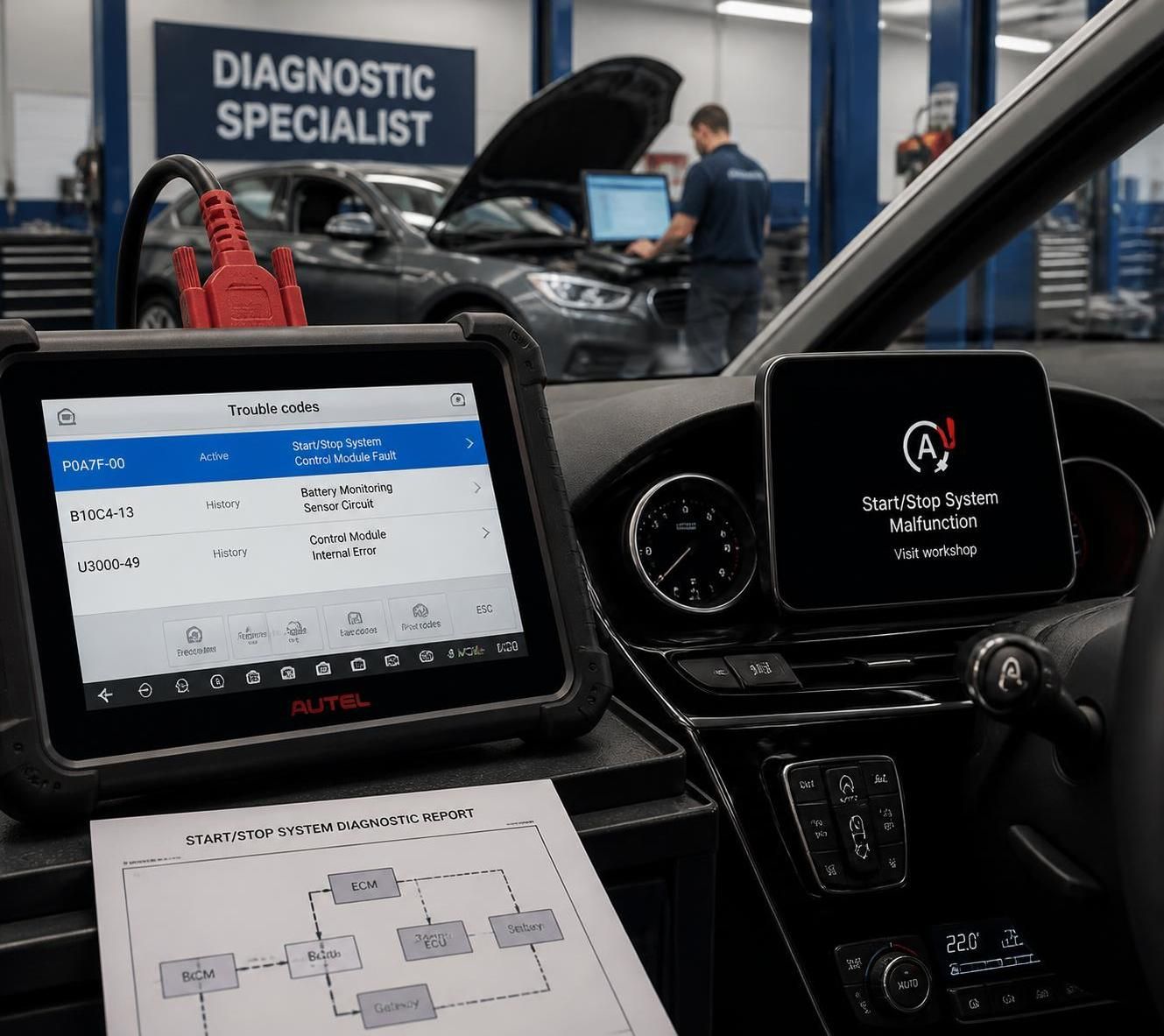
The battery is unquestionably the linchpin of a reliable start and stop system. Its technology and health status directly influence whether the system can engage efficiently. Traditional lead-acid batteries often lack the resilience required for frequent engine shutdowns and restarts, making them unsuitable for vehicles equipped with start-stop technology.
Modern vehicles designed with this system increasingly incorporate batteries of the EFB (Enhanced Flooded Battery) or the AGM (Absorbent Glass Mat) types. These batteries endure more charge-discharge cycles, thus maintaining consistent voltage supply crucial for stable operation.
It is common in workshops to encounter vehicles with a recently replaced battery that prevents the start-stop system from reactivating immediately. This is often because the replacement battery is either of an incorrect type—such as a standard battery instead of EFB or AGM—or the vehicle’s BMS has not recorded the new battery’s specifications properly. Such mismatches force the system into a protective state, disabling the feature to safeguard battery and starter motor integrity.
Professional diagnostic tools allow technicians to register the new battery correctly within the BMS, setting appropriate parameters aligned with battery technology and capacity. Without this step, the vehicle continues operating with obsolete data, which manifests as persistent start stop malfunction.
The importance of choosing the right battery and correctly encoding it has been documented extensively in technical references and expert platforms, including advice found on battery care and compatibility for start and stop systems.
| Battery Type | Cycle Resistance | Recommended Use | Relative Cost |
|---|---|---|---|
| Standard | Low | Non-start-stop vehicles | Low |
| EFB (Enhanced Flooded Battery) | Medium | Light start-stop applications | Medium |
| AGM (Absorbent Glass Mat) | High | Intensive start-stop systems, high electrical load | High |
Owners should request professional advice when replacing their vehicle’s battery to ensure they select a compatible type and confirm its coding in the BMS to avoid a start stop issue.
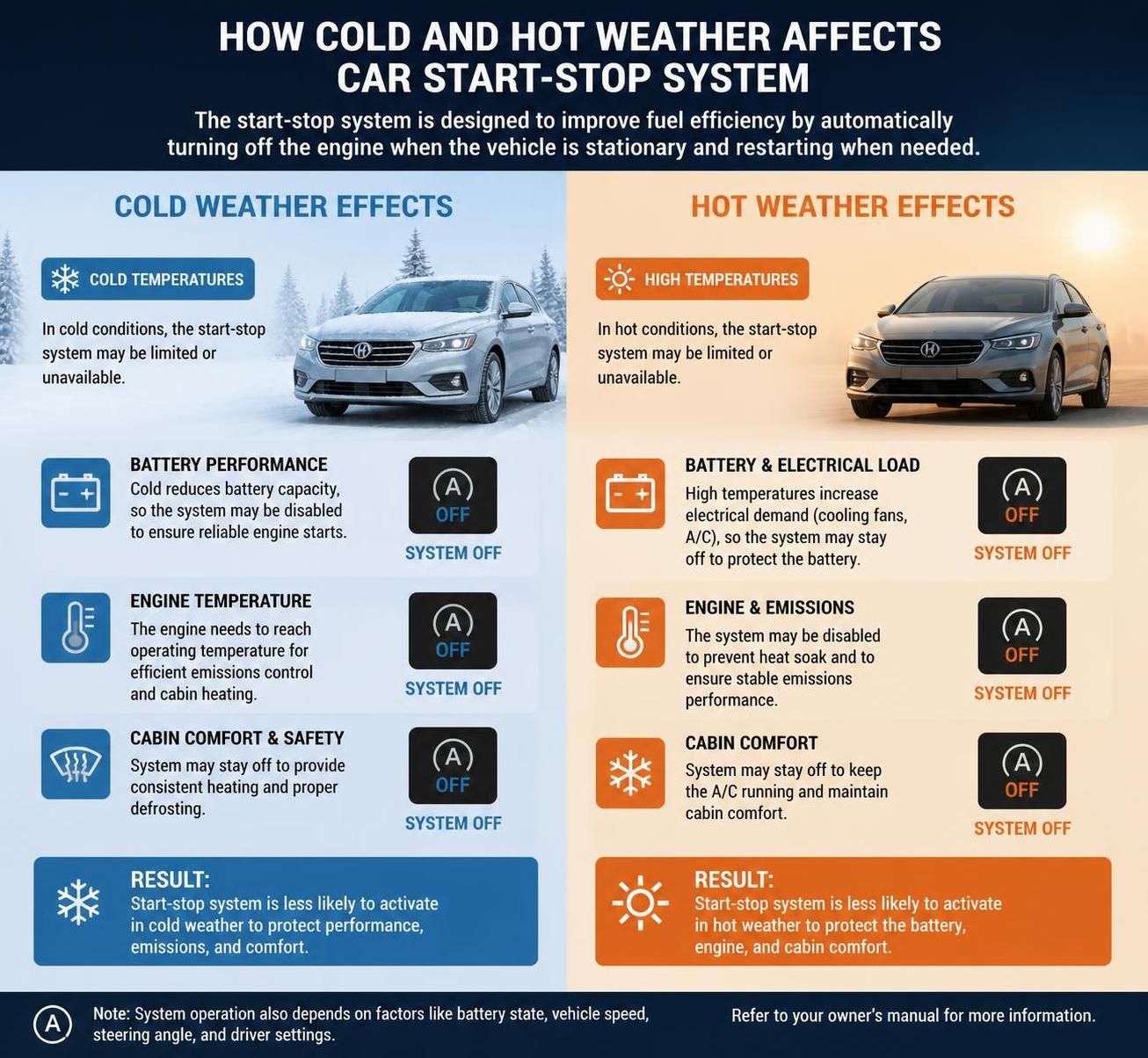
It is vital to consider environmental and operational conditions when troubleshooting a start stop malfunction. The system integrates safeguards to maintain engine health and occupant comfort, temporarily suspending its function when certain external factors are unfavorable.
Cold weather is a primary example: Below approximately 5°C, the battery’s ability to deliver sufficient current diminishes. To avoid potential engine starting problems, the system disables the automatic engine stop. In very hot weather or under heavy use of energy-demanding accessories like air conditioning or headlights, the system may also elect not to engage, as preserving full battery charge and engine readiness takes priority.
The nature of trips significantly impacts the system’s performance. Short urban journeys often do not provide enough time for the battery to fully regain charge. This partial recharge condition leads to a gradual decline in battery capacity for stop-start cycles, causing the system to switch off as a precaution.
Electrical load at the vehicle’s idle moments further complicates readiness. If large accessories remain operational while stationary, the battery must support these demands, reducing the margin for reliable engine shutoff and restart. This situation can cause the device not to stop, sometimes frustrating drivers expecting fuel savings at every traffic halt.
Owners are advised to moderate accessory use when possible and plan longer trips more regularly to help maintain battery health and optimize the start-stop system’s function. This practical advice helps prevent unnecessary visits to the workshop for what could be simple usage-related deactivation.
When confronted with a system that refuses to stop or start automatically, immediate attention to the physical integrity of the battery installation is crucial. Faulty or loose connections often simulate deeper electronic faults but are straightforward to resolve in the garage.
Ensuring battery terminals and connector clamps are secure and free from corrosion avoids voltage drops that misinform the BMS and trigger protective shutdowns. Additionally, sensors related to battery monitoring must be properly connected and intact.
A poorly secured battery or missing protective covers might induce intermittent faults, resulting in unreliable start-stop operation. Workshops emphasize checking battery housing and hold-downs to prevent damaging vibrations or accidental disconnections.
If checks show no visible physical issues, the next step is conducting a complete recharge using a dedicated charger optimized for EFB or AGM technology. Sometimes, recalibration through driving for at least 24 hours after a full charge allows the vehicle’s electronic control unit to relearn battery status and resume automatic functionality.
Should these measures fail, professional diagnostic tools must be deployed to assess battery capacity and BMS behavior precisely. Workshop technicians possess testers that measure internal resistance and battery health markers, indicative of potential premature wear or incompatibility.
This approach guards against unnecessary battery replacements or overlooking other causes such as clogged particulate filters or outdated vehicle software which can also mimic start stop issues.
Despite all checks and self-help attempts, certain start stop malfunctions require expert intervention. Failure to properly diagnose or treat can lead to greater costs and compromised vehicle reliability.
If coding the battery in the BMS is inaccessible or if error messages related to the engine management or battery system persist, it is prudent to turn to a qualified garage equipped with manufacturer-level diagnostic kits. Skilled technicians can interrogate control modules, update software versions, and identify hidden faults such as faulty sensors or wiring problems.
Advanced diagnostics also help determine if upgrading to a higher specification battery (e.g., replacing EFB with AGM) is necessary to sustain the vehicle’s electrical demands. The investment in quality components and professional service pays off long-term by preserving system function and preventing recurrent breakdowns.
Timely professional support avoids confusion and guesswork often associated with troubleshooting start and stop system failures. It is wise to consult a trusted local specialist to obtain a precise diagnosis and reliable quote before undertaking repairs.
For reputable advice and local professional service options, readers can explore resources such as vehicle revision and maintenance scheduling guidance which provide useful context on preventative care for all automotive systems.
Adopting a methodical approach—from battery verification to professional diagnosis—ensures that the start-stop system’s efficiency is restored with minimal downtime and cost.

Les critères essentiels pour choisir un pc portable diagnostic auto fiable Dans le secteur automobile, disposer d’un ordinateur portable automobile capable de…
Lire l’article →
Les centres auto modernes : une solution rapide pour un diagnostic voiture gratuit Pour un automobiliste soucieux de la sécurité et de…
Lire l’article →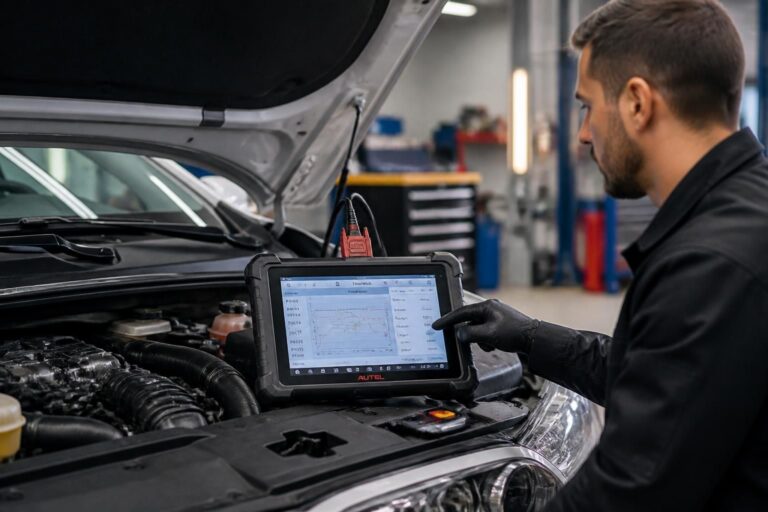
Les bases du diagnostic voiture : un indispensable pour l’entretien véhicule Dans le contexte actuel où les véhicules se complexifient chaque année…
Lire l’article →