
Quel est le prix d’un diagnostic électronique pour votre véhicule ?
Les bases du diagnostic électronique : comprendre son rôle et son utilité pour votre véhicule Lorsque le témoin d’alerte s’allume sur votre…
Lire l’article →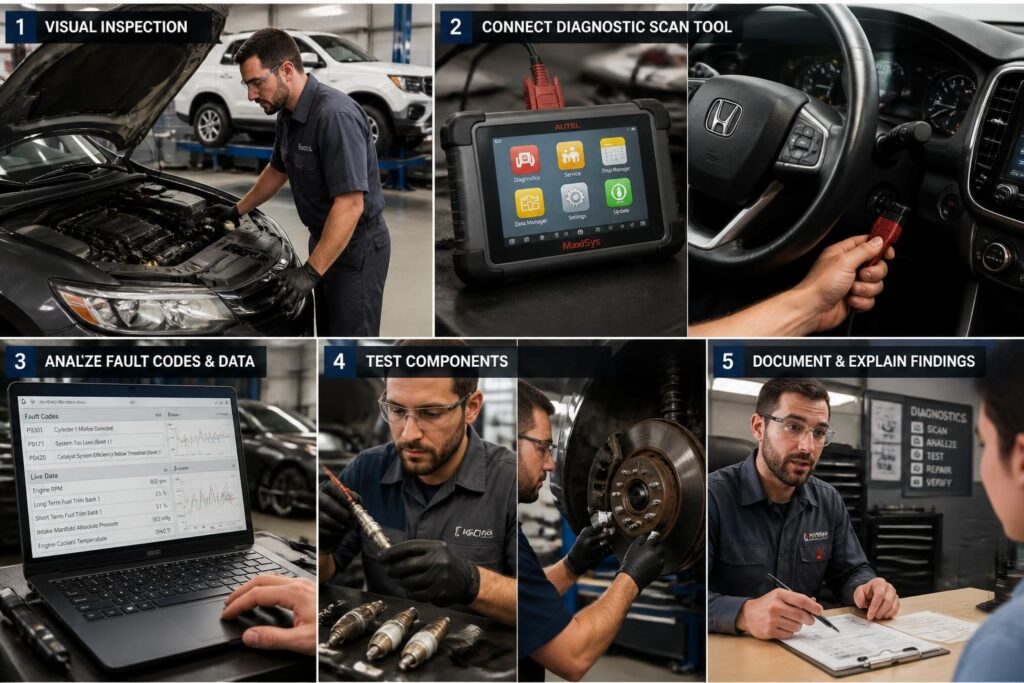
In today’s automotive landscape, vehicle inspection extends far beyond traditional visual checks. Modern cars integrate complex electronic control units, sensors, and software systems, necessitating a multilayered diagnostic approach to accurately identify faults.
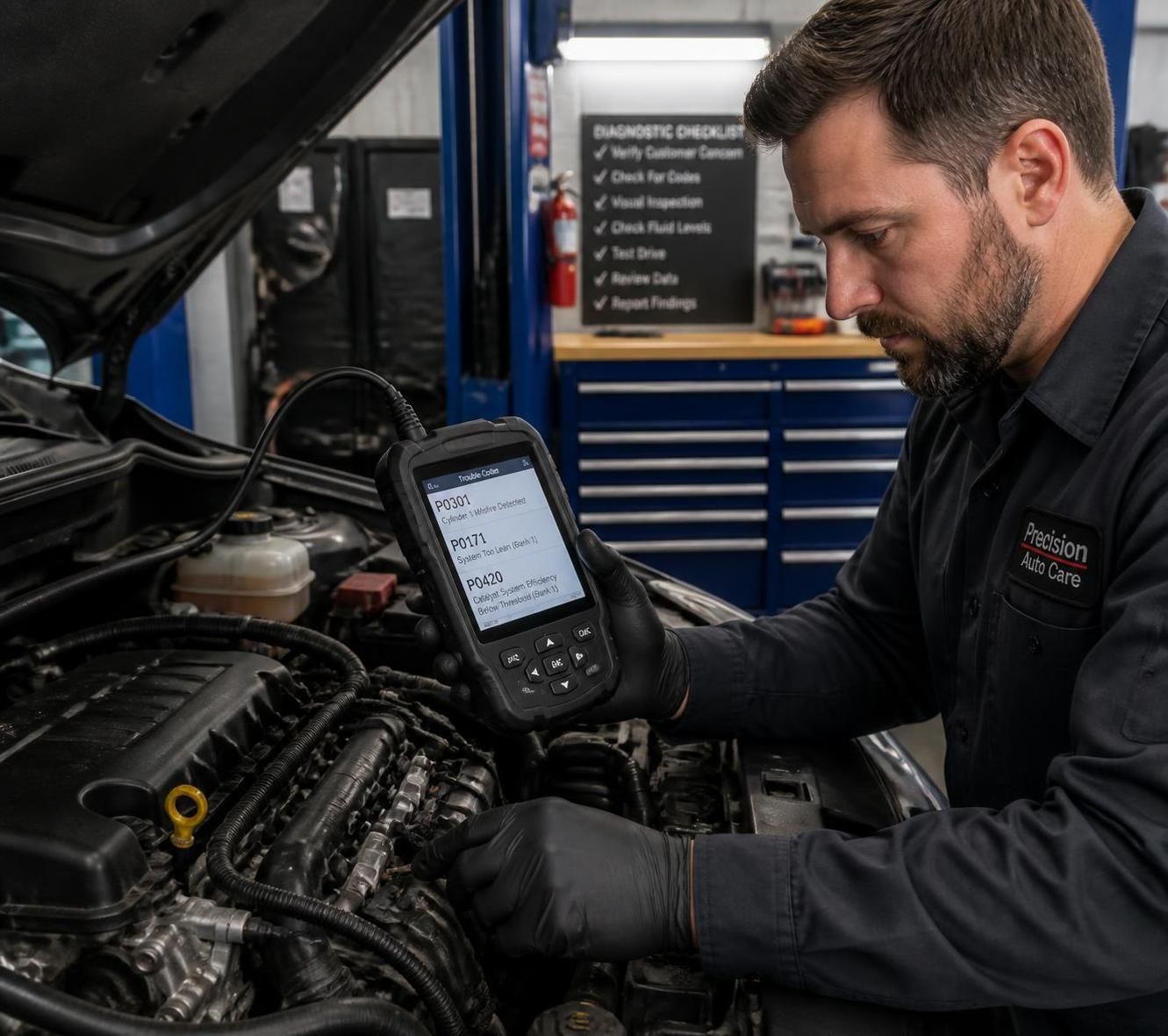
Fault code reading plays a pivotal role in this process. By extracting Diagnostic Trouble Codes (DTCs) via system scanning tools like OBD-II scanners, technicians and savvy vehicle owners can pinpoint malfunctions within the engine, transmission, braking systems, and beyond. With vehicles housing upwards of 100 electronic control units, precision is crucial.
For example, a seemingly simple dashboard warning light might correspond to multiple underlying causes. A code P0300, indicating random misfires, could stem from spark plug wear, fuel injector issues, or air intake leaks. Thus, initial code identification must be supported by comprehensive data analysis and corroborative checks.
Adding to the complexity, many systems interrelate — a sensor malfunctioning in the exhaust system can trigger an engine alert, while an issue in the electronic stability control may reflect as a chassis fault code. This necessitates combining electronic system scanning with physical inspections for a thorough evaluation.
Besides error codes, an expert-led manual inspection remains invaluable. Detecting worn belts, low fluid levels, or unusual engine noises complements electronic diagnostics to reveal latent problems. This holistic diagnostic approach helps in designing effective intervention plans to maintain vehicle safety and performance.
To grasp deeper insights and methodologies pertinent to automotive diagnostics, useful resources such as comprehensive automotive diagnostic guides offer extensive, practical explanations for vehicle owners and technicians alike.
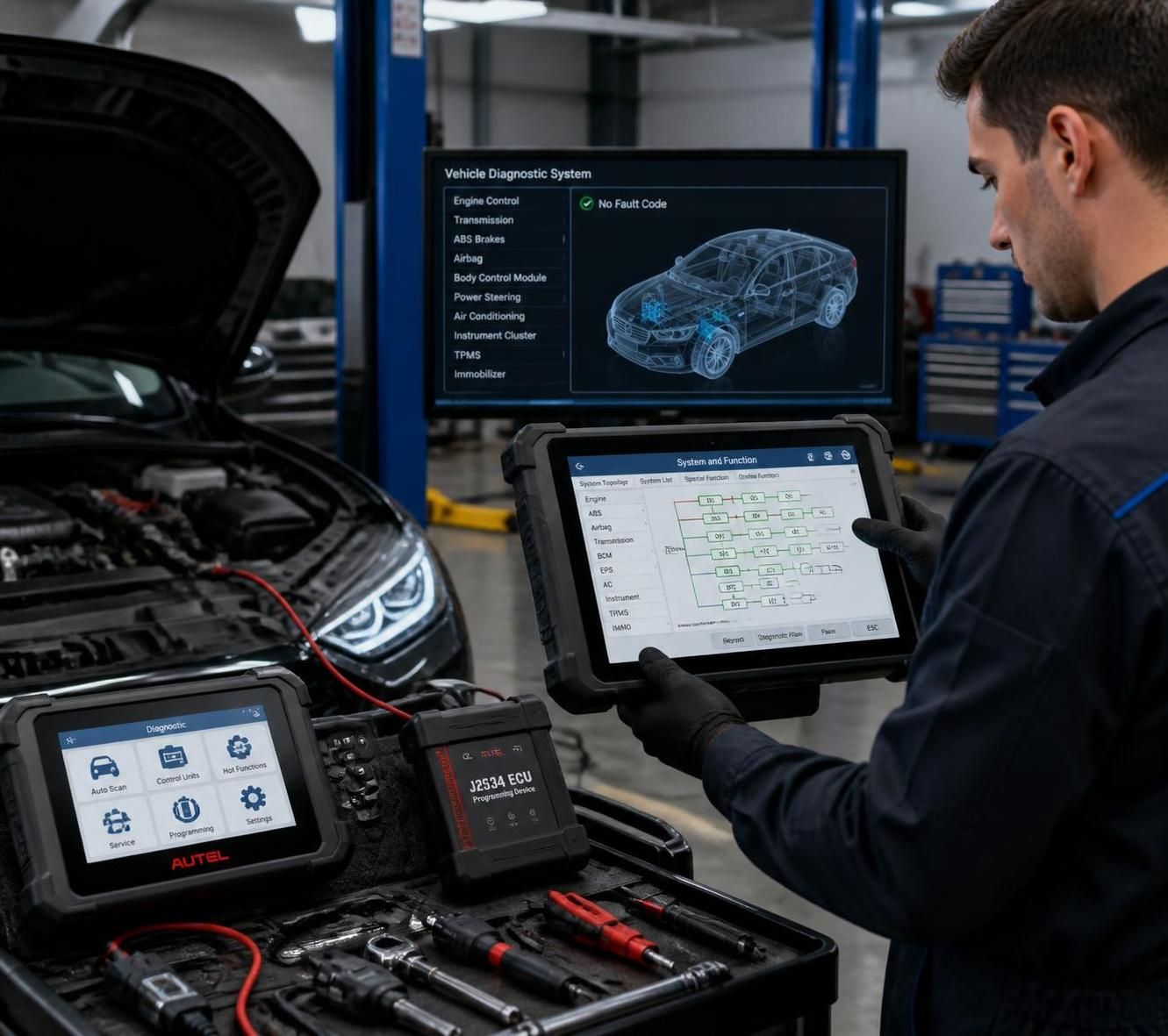
Carrying out a precise automotive diagnosis relies heavily on having the right set of tools. While a basic OBD-II scanner provides entry-level access to fault code reading, advanced scenarios require sophisticated equipment such as professional diagnostic valises capable of multi-system interrogation and live data streaming.
The professional valise can execute in-depth engine diagnostics, monitor sensor outputs, perform activation tests on components, and even update vehicle software. These features enable targeted repair recommendations and calibration adjustments vital for modern vehicles.
Meanwhile, accessible handheld scanners have significantly improved, offering essential functions like enhanced fault code retrieval and real-time parameter viewing, making them convenient tools for vehicle owners performing preliminary checks.
To complement electronic diagnostics, additional tools like multimeters, compression testers, and emission testing devices form part of a fully equipped workshop. For example, sensor testing using a multimeter can confirm the integrity of electrical signals, while emission testing ensures compliance with environmental standards.
The following table summarizes key tools in diagnostic workflows and their typical applications:
| Tool | Main Use | Typical Cost | Complexity Level |
|---|---|---|---|
| Basic OBD-II Scanner | Fault code reading, reset warning lights | €20 – €100 | Beginner |
| Professional Diagnostic Valise | Full system scanning, programming, data analysis | €500 – €10,000+ | Expert/Workshop |
| Multimeter | Electrical system check, sensor testing | €30 – €150 | Intermediate |
| Compression Tester | Engine mechanical condition assessment | €50 – €150 | Intermediate |
| Emission Testing Device | Pollution control, regulatory compliance | €200 – €1,000 | Professional |
Understanding tool capabilities assists vehicle owners and technicians in selecting the adequate device according to the diagnostic task complexity. For more detailed guidance on diagnostic instruments, the resource the 8 essential steps for successful automotive diagnostics breaks down tool functions and practical usage.
A methodical approach is the foundation of an accurate diagnostic process. Each step provides indispensable data points that, combined, paint a clear picture of the vehicle’s health.
Step 1: Preparation involves ensuring the vehicle is in optimal conditions for testing — this includes a warmed-up engine, fully charged battery, and availability of basic tools. This preparation ensures test readings, especially during performance evaluation, are reliable.
Step 2: Visual and physical inspection comes next, focusing on exterior checks such as fluid leaks, worn belts, tire wear patterns, and any obvious damage or corrosion. Such observations can highlight issues not yet flagged electronically.
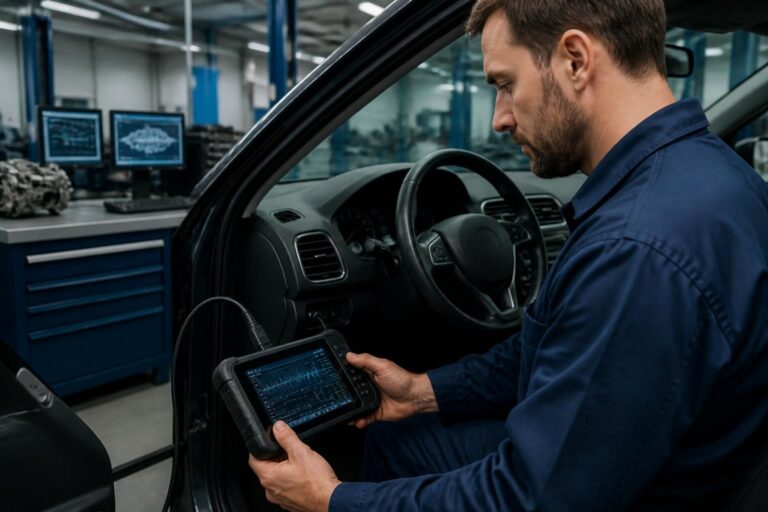
Step 3: Electronic system connection, where the diagnostic valise or scanner connects to the vehicle’s OBD-II port, initiating system scanning. During this phase, fault codes are read, and live sensor data is monitored. This facilitates identifying issues that trigger malfunction indicator lights and uncovering hidden faults.
Step 4: Road test and dynamic assessment allow evaluating the vehicle under actual operating conditions. Observing engine response, braking, steering feel, and listening for abnormal noises augments the diagnosis by incorporating subjective mechanical feedback.
Step 5: Data interpretation and problem pinpointing combine the accumulated diagnostic data with technical knowledge to identify root causes accurately. This phase often involves accessing repair manuals and databases to decode fault codes and their probable fixes.
Finally, Step 6: Rectification and verification involves performing the necessary repairs or maintenance based on the diagnostic findings, followed by clearing error codes and rerunning tests to confirm resolution. Skipping code erasure can lead to recurrent alerts and confusion.
Following a structured process avoids wasted time and unnecessary costs. In-depth explanations on these stages help enthusiasts and professionals alike; a useful tutorial outlining these essential diagnostic steps is available at this dedicated platform.
Reliable automotive diagnostics cannot overlook the vehicle’s history. Even the most advanced data analysis and electrical system checks may miss latent issues linked to past accidents, incomplete repairs, or irregular maintenance.
When purchasing a used car, an inspection combining traditional diagnostics with historical verification safeguards future owner investments and safety. Records regarding mileage consistency, previous ownerships, accident reports, and recall information provide context that raw diagnostic codes alone cannot.
The Vehicle Identification Number (VIN) serves as a gateway to accessing such comprehensive histories. Every vehicle’s unique VIN encodes detailed construction data, which technicians cross-reference to confirm part compatibility and detect fraudulent modifications.
Specialized services gather official registry data, insurance claims, workshop reports, and technical recalls, offering buyers and professionals an aggregated view of the vehicle’s background. This holistic evaluation method is vital because conditions like engine diagnostics might appear normal but underlying frame damage can pose serious risks.
Typical indicators warranting deeper historical investigation include:
Incorporating history checks in the diagnostic workflow ensures smarter decisions and reduces costly surprises. For those seeking guidance, information on vehicle history’s diagnostic impact can be found in articles like reliable automotive diagnostic and verification tutorials.
Diagnostic errors can mislead repair efforts and inflate costs. Some frequent mistakes include:
There are situations where diagnostic complexity surpasses beginner and even intermediate capability, notably when dealing with advanced electronic systems such as airbags, ABS, or engine management modules. These require sophisticated tools and trained technicians for precise troubleshooting and, at times, recalibration or reprogramming after repairs.
The decision to consult a professional is prudent if:
Professional diagnostics also provide detailed reports and quantified repair cost estimates, aiding informed decision-making. For contextual pricing details and guidance, such as the current rates for professional diagnostics, readers can refer to trusted sources like automotive diagnostic price overviews.
Les bases du diagnostic électronique : comprendre son rôle et son utilité pour votre véhicule Lorsque le témoin d’alerte s’allume sur votre…
Lire l’article →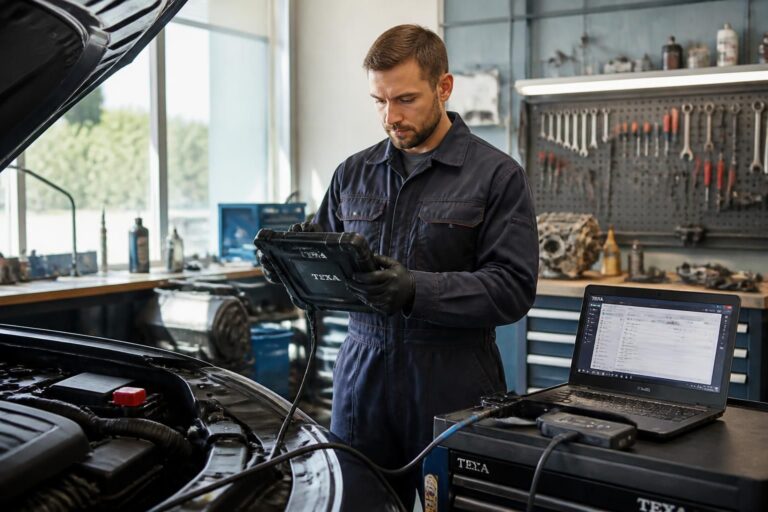
Comprendre la valise de diagnostic automobile : fonctionnement et utilité La valise de diagnostic automobile est un outil devenu incontournable pour quiconque…
Lire l’article →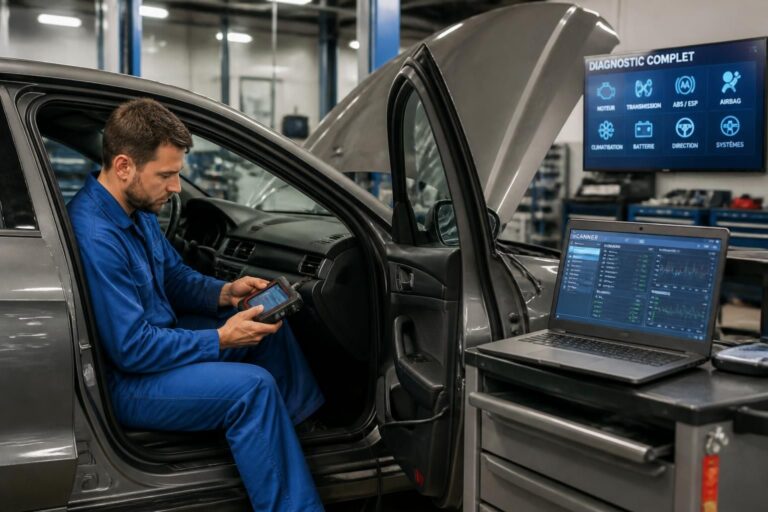
Comprendre les bases du diagnostic voiture pour un contrôle technique efficace Le diagnostic voiture est devenu une étape incontournable pour assurer la…
Lire l’article →