
Comment trouver un garagiste honnête pour réparer votre voiture sans souci
Les critères essentiels pour reconnaître un garagiste honnête et fiable Choisir un garagiste honnête pour la réparation voiture est primordial afin d’éviter…
Lire l’article →
Vehicle owners preparing for their car inspection in 2026 should expect variable costs depending on the outcome of the initial technical check. The vehicle inspection cost generally ranges from 70 to 90 euros for a full inspection, but when a vehicle does not pass—leading to a required inspection retest—the charges differ substantially.
A retest fee, often called a control visit cost, applies exclusively to verifying the repairs made to specific, failed components. Unlike the original full check, this retest does not review the entire vehicle but focuses on the exact defects flagged during the initial control. This targeted approach helps reduce costs and speeds up the process for drivers.
The technical check price for a retest in 2026 usually lies between 15 and 45 euros, averaging around 20 euros depending on the center and the severity or number of issues being reassessed. For instance, a retest concentrating on a single defective headlamp will cost less than a retest for multiple problems affecting brakes, suspension, and lighting systems.
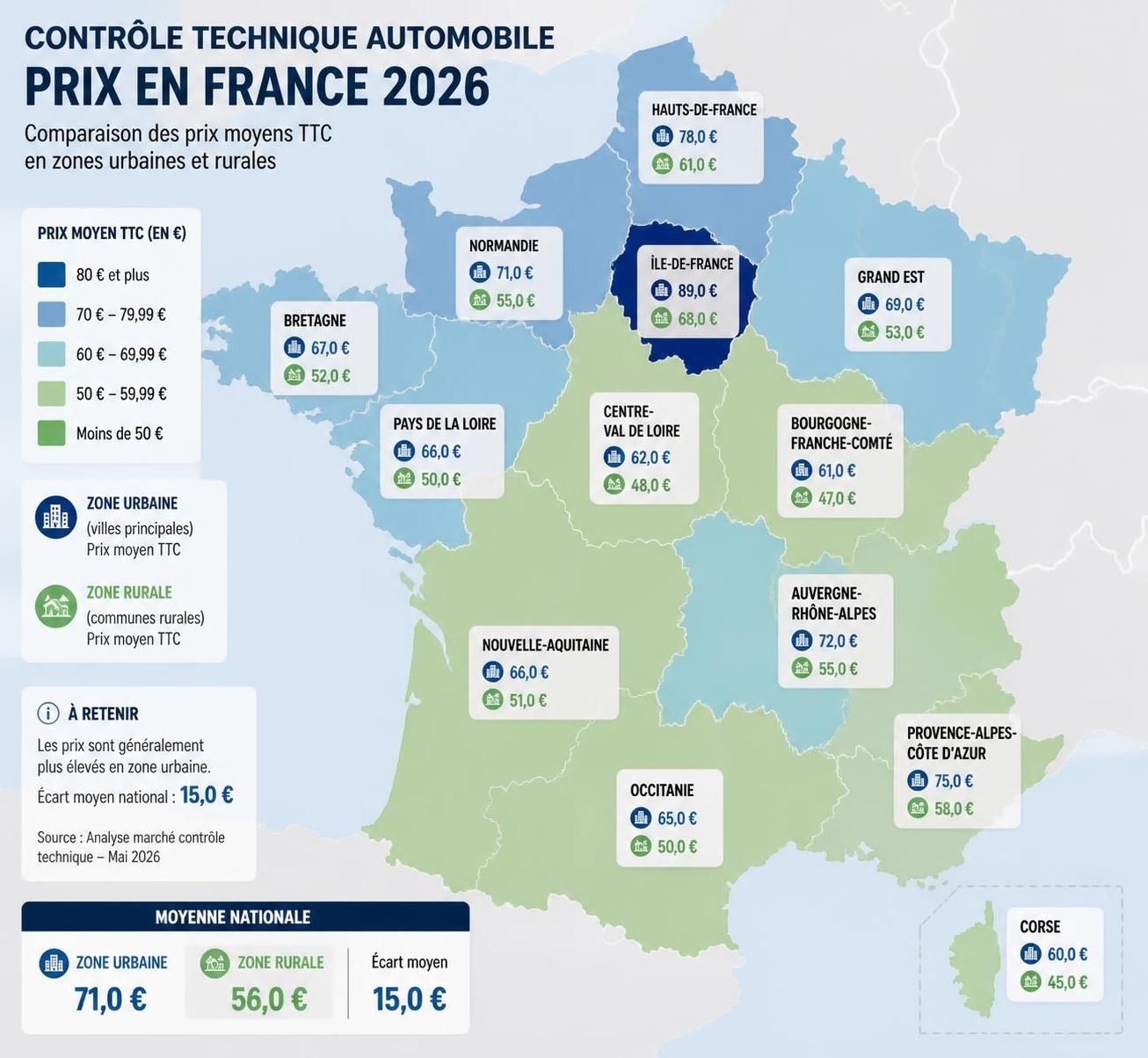
Factors influencing the auto inspection price 2026 include the type of vehicle—cars, motorcycles, or commercial vehicles—as well as the geographic location of the inspection center. Urban centers, especially in large cities, tend to have higher rates due to operational costs, whereas rural areas often present more competitive pricing.
Having a clear understanding of these costs allows car owners to plan their budgets effectively. It is advisable to register and schedule your vehicle inspection early and anticipate a possible retry fee. For a detailed breakdown of fees in different regions and for various vehicle types, consult official resources like auto controle technique price guides.
Since the retest is restricted to the points that failed initially, drivers should ensure the repairs align precisely with those defects to avoid multiple visits or additional expenses.
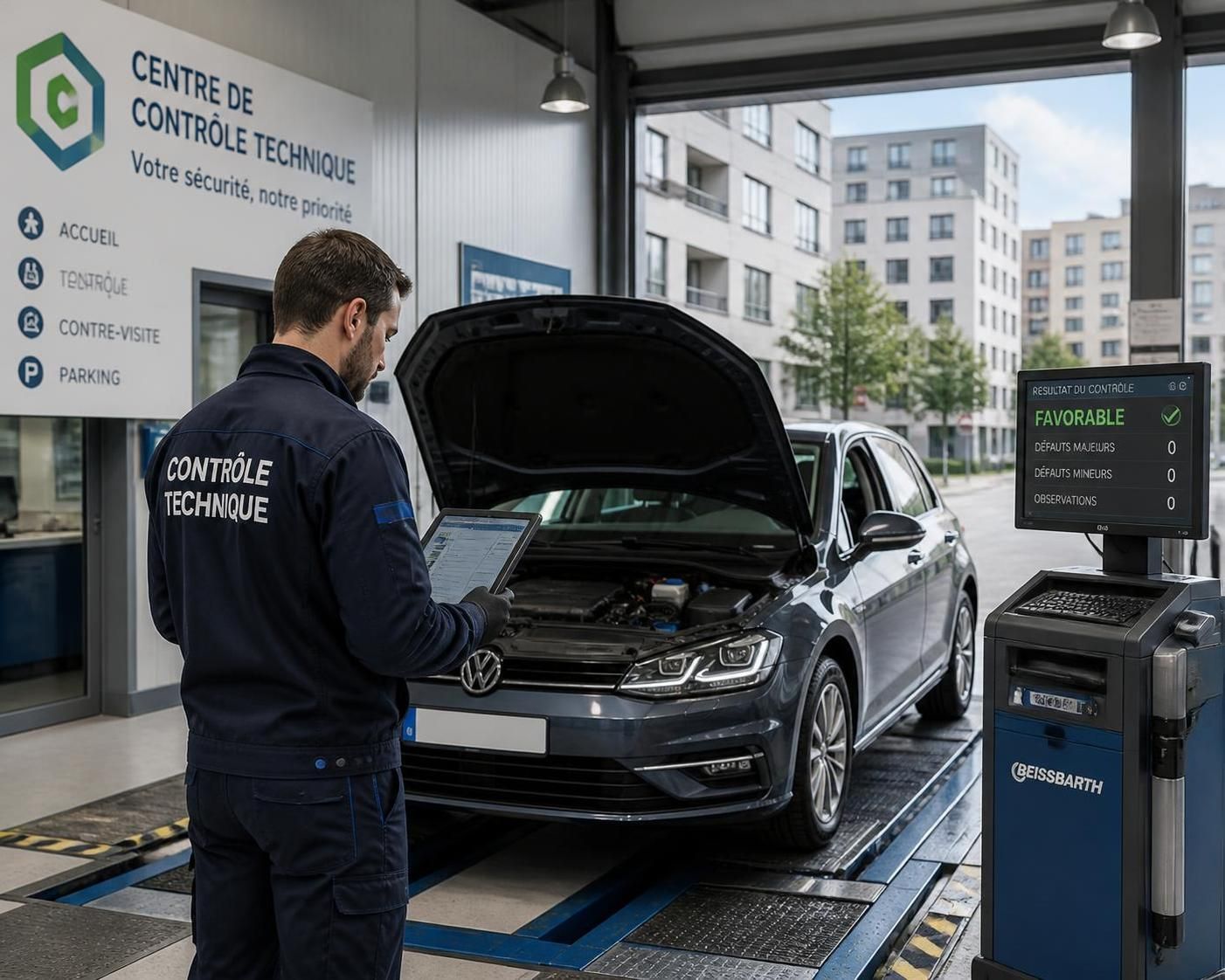
Understanding the different types of faults detected during a car inspection is fundamental to grasping why an inspection renewal fee may be due and the timelines involved for repairs and retests.
The French vehicle control system classifies faults into three categories:
These distinctions directly impact the urgency and the financial implications of the inspection retest fee. For critical issues, additional costs may come from towing or immediate repair services, increasing the overall expense beyond the retest fee itself.
Every defect identified in the initial inspection has its own control visit cost related to the complexity and time required to verify corrections. Safety-related repairs often demand more detailed verification and thus may increase charges.
For example, retesting a simple lighting fault might cost around 15 euros, whereas recalibrating safety-critical elements like braking systems could push the fee to the upper end of the price range, namely 40 to 45 euros.
To avoid surprises, it is vital for vehicle owners to read the inspection report carefully. The report specifies the defects requiring repair and provides clear instructions to prevent unnecessary work and reduce additional expenses.
The cost of a vehicle check-up is influenced considerably by the inspection center’s location. In 2026, metropolitan areas and regions with high operational costs see a notable increase in average prices compared to rural locations.
Centers in large cities like Paris, Lyon, or Marseille usually add a premium to cover their higher overheads such as rent, staffing, and local taxes. In these urban zones, the technical inspection price for a standard retest may be as much as 30 to 45 euros.
Conversely, many rural centers—serving less dense populations and benefiting from lower running costs—often offer retest fees closer to 15 or 20 euros. This pricing disparity motivates some motorists to consider traveling further afield to reduce their vehicle inspection cost.
Here is a tabular representation to illustrate the variations in retest pricing according to location and vehicle type:
| Location | Vehicle Type | Average Retest Fee (€) | Comments |
|---|---|---|---|
| Metro Areas (Paris, Lyon) | Private Cars | 30 – 45 | Higher operating costs impact prices |
| Urban Suburbs | Private Cars | 22 – 30 | Mid-range pricing with some variability |
| Rural Areas | Private Cars | 15 – 22 | More competitive rates due to lower overheads |
| Metro Areas | Commercial Vehicles | 40 – 60 | Inspection complexity and size increase cost |
| Rural Areas | Commercial Vehicles | 35 – 50 | Lower compared to metro but still higher than cars |
Motorists should also remember that choosing to change the inspection center for the retest may lead to paying a full inspection fee if the new center conducts a complete technical check instead of a targeted retest. Staying with the original center is naturally more economical due to their access to previous inspection data.
For more insights into local price differences and how to find competitive offers, consulting resources like local vehicle inspection advice can be helpful.
Legal stipulations strictly govern vehicle inspections in France. Upon receiving a result indicating either major or critical defects, the motorist has exactly two months to complete repairs and undergo the retest — otherwise, the full inspection must be repeated at the full standard price.
This deadline is uniform whether the fault is classified as major or critical. However, the consequences differ in practice:
This legal framework ensures traffic safety but also means that neglecting the timeline can lead to significantly increased expenses. Should the owner wait beyond two months, the vehicle must be reinspected from scratch, resulting in a full technical inspection price application which can exceed triple the retest cost.
Motorists must also note that the validity of the inspection certificate does not renew or extend after the retest. Successful retest results adopt the original inspection date’s validity period, generally two years from that initial check.
Additionally, roadside checks now allow authorities to instantly verify inspection status electronically, applying penalties for drivers who fail to comply with the retest provisions. These can include fines of up to 750 euros and vehicle immobilization.
To navigate these requirements smoothly and avoid unexpected costs, it is essential to keep all documentation related to the inspection and repairs meticulously organized.
Minimizing the financial impact of an inspection renewal fee is achievable through preparation and savvy choices. Prevention is key but so is selecting the right inspection center and scheduling appropriately.
Several approaches can help reduce the auto inspection price 2026 burden:
Engaging a trusted local garage such as Garage Crauzaz Nurieux can also provide mechanical expertise to ensure quality repairs that stand up to retest verification.
By adopting these strategies, vehicle owners can keep their vehicle check-up cost within reasonable limits, avoid legal complications, and maintain road safety throughout the car inspection cycle.

Les critères essentiels pour reconnaître un garagiste honnête et fiable Choisir un garagiste honnête pour la réparation voiture est primordial afin d’éviter…
Lire l’article →
Les critères indispensables pour reconnaître un garage sérieux Lorsque vous cherchez un garage sérieux pour entretenir ou réparer votre voiture, plusieurs critères…
Lire l’article →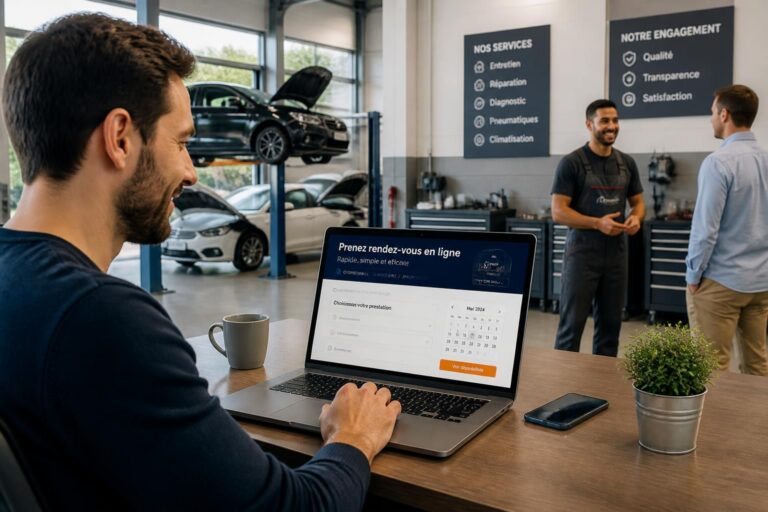
Les étapes clés pour prendre rendez-vous dans un garage facilement Prendre rendez-vous dans un garage peut parfois sembler fastidieux, surtout lorsque l’on…
Lire l’article →